
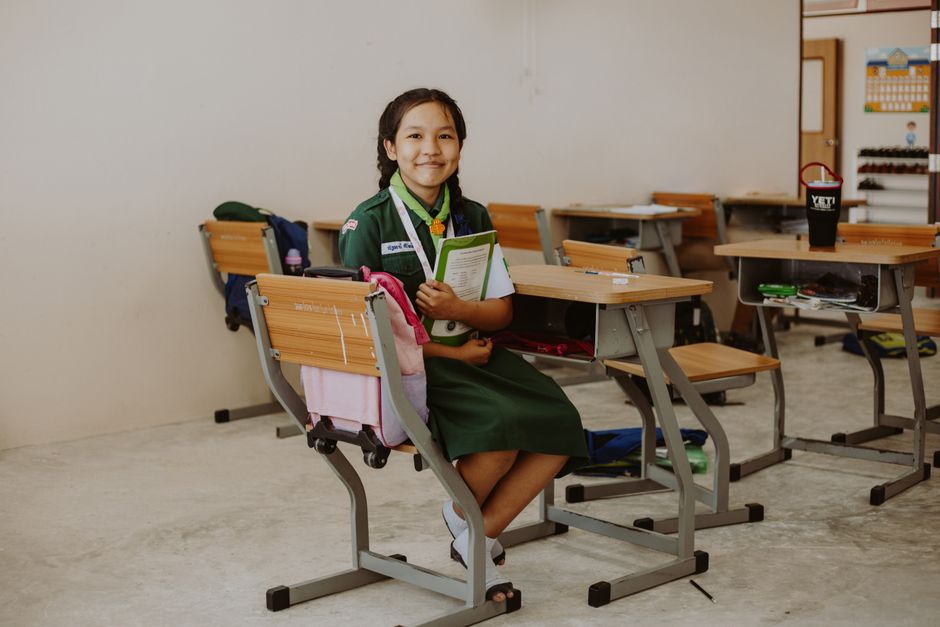
A child moving from a US curriculum to a British international school will usually notice the daily rhythm before the academic differences. Bells, form time, subject-specific classrooms, exercise books, homework routines, and unfamiliar classroom language can make the first morning feel more demanding than the timetable suggests.
In 1999, NASA’s Mars Climate Orbiter approached Mars while navigation teams tried to understand why its calculated trajectory was drifting. The spacecraft was lost. NASA’s formal investigation found that one team had supplied thruster data in pound-force seconds while another system expected newton seconds.
The hardware had crossed millions of kilometres. A difference in working conventions defeated it near its destination.
The timetable may look familiar while the routine feels new
A US-to-British school transition can produce a quieter version of the same problem. Everyone may use familiar words such as English, mathematics, science, homework, and grades, but the underlying conventions can differ.
The morning may begin with registration or form time rather than moving directly into the first academic class. Bells can divide the day into shorter periods. Students may change rooms more frequently, carry different books for each subject, or follow a weekly timetable that varies by day.
Names also matter. “Math” may become “maths.” A “quiz” may be called a test or assessment. “Grades” may refer to marks, while “Year” identifies the student’s school level. A child who understands the subject can still hesitate because the teacher’s instructions arrive in unfamiliar packaging.
Parents can reduce that uncertainty before the first bell. Ask the school for the timetable, campus map, equipment list, homework process, and the names used for registration, breaks, lunch, clubs, and dismissal. Read them together. The goal is simple: let the child spend less attention decoding the routine and more attention following the lesson.
Classroom expectations can shift without being announced
The first academic surprise may come from how work is recorded and evaluated.
A student accustomed to worksheets, digital submissions, multiple-choice tasks, or participation-based grading may meet exercise books, longer written responses, specific working methods, and assessment language tied closely to a curriculum. In Cambridge programmes, words such as “describe,” “explain,” “compare,” and “evaluate” can signal different levels of response.
Teachers may assume that students already know how to lay out calculations, label diagrams, show evidence, or structure an answer. A capable child can lose marks while still understanding the content because the expected form of the answer has changed.
That is why the first week should include more than asking, “How was school?” Better questions reveal the hidden rules:
- Which instruction did you hear today that was new to you?
- Did the teacher show an example of a strong answer?
- Where are assignments posted and submitted?
- Which books or files must come home each evening?
- Was any topic treated as revision even though it felt new?
If a class assumes prior knowledge the student has not covered, treat that as a curriculum-mapping issue rather than evidence that the child cannot cope. The practical response is to compare recent schoolwork with the new programme and identify missing topics early. Families facing that situation may also find What Happens When a New School Assumes Your Child Has Already Learned a Topic? useful.
Social cues are part of the working system
Daily routines carry cultural information too. A student may need time to learn how teachers are addressed, when speaking without raising a hand is acceptable, how group work is organised, and what happens when someone arrives late or forgets an exercise book.
Uniform expectations may add another layer where applicable. Even small matters, such as where to wait before class or whether sports clothing is worn for the full day, can occupy a surprising amount of attention.
Parents do not need to predict every difference. They can create a low-pressure way to record them. For the first two weeks, keep a short transition note with three headings: “new word,” “new routine,” and “academic gap.” One entry under each heading is enough.
This separates adjustment from attainment. A forgotten room number needs a timetable solution. An unfamiliar command word needs an explanation and practice. A missing algebra topic needs teaching. Each problem becomes smaller once it has the correct label.
Check the units before judging the result
NASA’s Mars Climate Orbiter investigation, published in the agency’s Mars Climate Orbiter Mishap Investigation Board Phase I Report, did not treat the loss as a vague communication failure. It identified the incompatible units and examined why the checks had not caught them.
Families can take the same disciplined approach to a school transition. Before concluding that confidence, motivation, or ability has fallen, check the conventions surrounding the work. Compare terminology, topic sequence, answer format, homework systems, and assessment expectations.
Curriculum-specific tutoring can help with this mapping because the tutor needs to understand the programme the student has entered, rather than offering generic support in the subject. Accelerate Tutors matches students for Cambridge Checkpoint, IGCSE, International A Level, IB programmes, and US pathways, with live online lessons available worldwide and in-person tuition available in Ghana.
The most useful first step is a small one. At the end of the first week, place the timetable, one completed assignment, and one piece of teacher feedback side by side. Look for the unit mismatch before asking the child to work harder.
Comments
No comments yet.